


Miss Sherlock reimagines Arthur Conan Doyle's beloved investigative tandem as an incongruous pair of women solving mysteries and preventing crime in modern day Tokyo. The latest in a long string of interpretations, this HBO Asia/Hulu presentation makes plenty of references to the original works and endows its characters a certain degree of similarity, but altogether feels like a different show on its own. Top billed by familiar faces, and produced with enough style and care, it's one of those series that you would expect to love but somehow don't.
There's just something amiss and faulty in its execution---so while there are amusing alliterations and superficial elements to it that remain recognizable, the core element, which is the partnership between Holmes and Watson, gets lost in the gender and race alteration. The series tries to provide a new take on the relationship but the cultural transposition somehow makes the bond between the two less evident and unconvincing. As a result, you have female counterparts that are like Holmes and Watson but they're not Holmes and Watson per se.


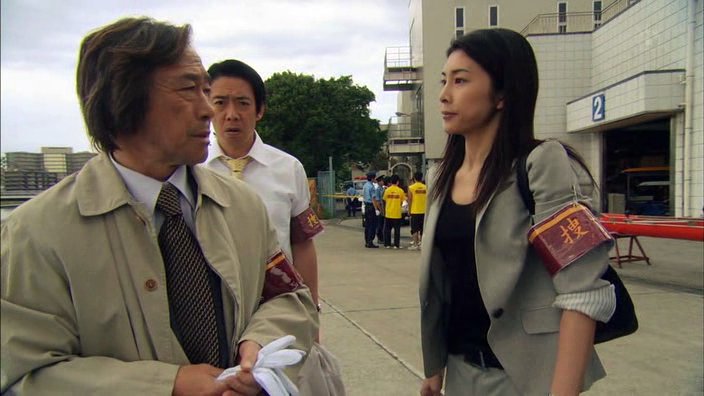
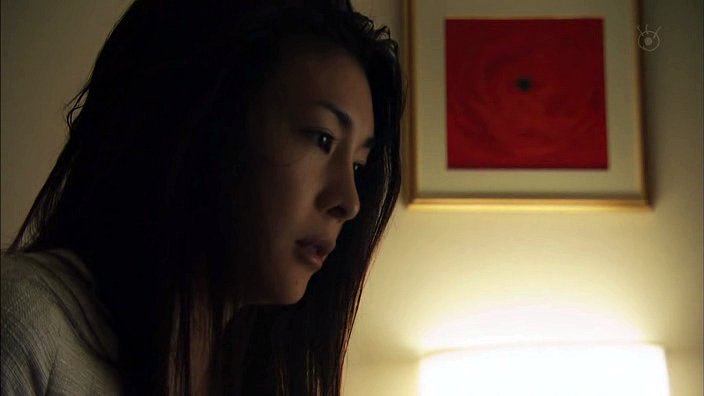
In this version, the titular character Sherlock (Takeuchi Yuko) is a female consulting detective working for the police department under the authority of Lt. Reimon Gentaro (Kenichi Takito). Highly intelligent with a petulant air about her, she has a reputation for being rude and disagreeable but her ability to piece together information and crack cases is matched by no other. Comprising the other half of this sleuthing duo is Tachibana Wato (Kanjiya Shihori), a doctor who just returned from a volunteer mission in Syria, currently in search of a new direction in life. Polite and well-mannered, she finds herself sharing a house with Sherlock and tagging along each adventure under the pretense of keeping her eccentric flatmate in line. Together, they face danger and solve mysteries, forging an unlikely friendship that Sherlock keeps denying the existence of until the very last minute.
The series has three (3) standalone cases that involve a missing bride, a vandalized artwork in public exhibition, and a family curse that allegedly compelled a mother to drink her child's blood. The remaining five (5) pertain to a series of crimes instigated by one person who goes by the moniker Stella Maris, otherwise known as The North Star, who guides wayward individuals to their true calling.
Keeping up with the times, Miss Sherlock updates the business of the main adversary from being the leader of an organized crime syndicate to charismatic head of a full blown extremist-terrorist group. The perpetrators are victims of abuse, social misfits and misguided social justice warriors that no longer respond to logic or reason, making each encounter with an adherent unpredictable and dangerous for Sherlock and Wato.
Keeping up with the times, Miss Sherlock updates the business of the main adversary from being the leader of an organized crime syndicate to charismatic head of a full blown extremist-terrorist group. The perpetrators are victims of abuse, social misfits and misguided social justice warriors that no longer respond to logic or reason, making each encounter with an adherent unpredictable and dangerous for Sherlock and Wato.


Giving Sherlock's nemesis the ability to alter people's thoughts and perceptions, gives the character a new passive-aggressive slant. To this extent, the show explores the thesis on how brain trauma can turn people into violent criminals and how emotionally scarred individuals can be made vulnerable to manipulation and suggestion. The downside to it is that the crimes as committed lacked refinement, most of them, impulse-driven. In effect, the criminal mastermind prompts people to act without making room for exigencies, thereby guaranteeing the failure of each mission at the hands of our dedicated duo.
The manner of the commission of the crimes and the resolution of certain puzzles also don't hold up to scrutiny despite the laborious set up of certain scenes. For instance, a weaponized smart pill is only lethal up to the time of the carrier's next bowel movement, the specs to a nuclear warhead written in blood on the wall of a prison facility would have long been erased using bleach as a cleaning agent, and how spreading a virus without discussing the mode of transmission from the infected host comes off as a huge contrivance, particularly when he's dispatched in a wide open space without incident.
Even without nitpicking at the cases, Miss Sherlock has one major flaw---and this is its inability to translate the strength and complexity of the relationship of the iconic characters from which this series is based on to the present adaptation. This plaid and kimono silk incarnation is built on an unequal and whimsical partnership, wherein Sherlock is the star and Wato plays second fiddle. A recent interview with actress Takeuchi Yuko even likened Sherlock's fondness of Wato to that of a pet. [1] Overall, the writers did not take into account the change in the dynamics of this friendship, with the script failing to convince viewers of the natural rapport between the leads. The gender reversal automatically affects the constitution of what is supposed to be the basis of female bonding, while the cultural relocation itself hinders characters from being too open and expressive. The character of Sherlock in this setting is too much of an anomaly, she sticks out like a sore thumb. Wato, in theory, exists to make her seem less severe and accessible but unintentionally comes off as too submissive and feeble. If the show comes back for a second season, the first thing that they should fix is the existing disparity in the roles assigned to these two characters, otherwise it will look inferior next to BBC's Sherlock and CBS's Elementary.
RATING:

GENDERBENT VERSION
HUMDRUM CASES
POOR RAPPORT BETWEEN LEADS
EXCELLENT PRODUCTION VALUE







 Posts
Posts

