Monday, January 31, 2011

Goth: Love of Death


Two high school students come together to investigate a string of murders---not because they're teenage sleuths who want to catch the culprit, but because they want to admire and inspect the killer's handiwork. Visually stunning, like an amalgamation of nightmares and dreams, Takahashi Gen's movie adaptation of the Otsuichi light novel, Goth, succeeds in establishing a mood and tone which befits its source material but draws back from delving into the darker elements of the original work in favor of producing a compact storyline that's easier to follow.

This is another one of those movies where you either get it or you don't. I guess it all depends on what you expect coming into it but allow me to tell you up front that this movie is not so much a murder mystery as it is an impressive attempt at capturing the disposition of the characters through the use of sight and sound. I'm sure that those who've read the book and the manga on which this movie is based can vouch that the cinematic feature doesn't even come close to being as dark and twisted as author Otsuichi imagined or intended it to be, but I think that the changes introduced to it were necessary given the style and structure of the story.

*     *     *

A serial killer is on the loose and he's preying on beautiful young women, leaving them on display as lifeless pieces of art in public places, keeping only the left hand of his victims as a memento of his work...

Will you teach me how to smile like that?
A second victim has just been found at the local park and present at the crime scene, cordoned off with the rest of the onlookers who came to witness the grotesque exhibit, high school students Morino Yoru (Takanishi Rin)  and Kamiyama Itsuki (Hongo Kanata) individually take in the scene, silently acclimating themselves to the ghastly atmosphere, unable to tear themselves away by reason of morbid curiosity.

Instinctively picking each other out, the two lock eyes, quick to identity how the other must have a similar reason for staying behind and looking more engrossed than the average member of the crowd.

The following day in school, the they measure each other up, eager to see whether they shared the same abnormal fascination with death, decay and human cruelty.

Compelled by a common desire to seek the killer out, misanthropic Morino and the outwardly genial Kamiyama decide to conduct an investigation of their own, hoping to be the first to uncover and witness the killer's next gruesome art form. They start off by meeting after classes, exchanging notes and doing research, gaining any and all information available on the killer and his three victims. They then proceed to visit the places where the bodies were found, going as far as reconstructing the crime scene, with Morino assuming the victim's position as described in newspaper clippings. The two approach the case as they would pursue an after school activity; discussing every detail of the murders as if it were a  normal conversation topic. This so-called hobby of theirs, posed no real threat or danger, that is, until one of them stumbles upon a diary that contains a detailed account of the murders, including directions to the location of the fourth victim which the authorities have yet to discover. Suddenly, they find themselves closer to the killer than ever, and as they continue to track him down, it becomes apparent to both of them that they have different motivations for seeking him out.


Slow, surreal, cool and baffling---Goth is basically an experiment in storytelling, one which partly succeeds in creating a pseudo-mystery and character study, made possible only through the use of striking images and well-placed musical cues. Writer-director Takahashi Gen brazenly condenses Otsuichi's light novel by stripping whole sections and events narrated in the book from the film version, deliberately retaining only parts of the story to make up a significant whole. His vision of Goth essentially takes on the form of a psychological thriller, one that prefers not to explain as much as to show how two people who appear to be so similar, can turn out to be different at their very core.

Shot entirely in soft focus, cinematographers Ishikura Ryuji and Kugimiya Shinji imbue the film with an ethereal and fairytale-like atmosphere---giving earth colors a richer tint and texture while allowing primary and secondary colors a more prominent and incandescent presence throughout the film. Watching Goth is like being immersed in a dream that can  potentially turn into a nightmare at any given moment; it cultivates an escalating sense of foreboding which comes in sharp contrast to the utter brightness of certain scenes and the delicate, almost angelic, features of the characters seen onscreen.


From a visual standpoint, Goth is definitely one beautiful and arresting piece. it manages to entrance viewers with its overwhelming use of light and vibrant colors, more so, when the same is used to stage a frightening or creepy spectacle. It has elements in it that would no doubt fit in nicely in a horror movie or a slasher flick but Goth never breaks its cadence or succumbs to clichés in reaching its conclusion. Instead, it proceeds without an obvious hint of urgency, bearing the quiet confidence that those who have been enticed to follow these two characters will see them through the end of their journey.

To accomplish this, Takahashi Gen and his able team of writers, namely, Gram, Takashi Hotta, Michio Kashiwada and Midori Saito made crucial changes to the original material in order for the audience to see only Yoru and Itsuki. They smartly dispensed with the use of the voice-over device that could have given away the story and likewise scrapped the endless parade of serial killers that could have graced and cluttered the screen. And while the movie may have lost out on the initial shock and clarity that comes with having easy access to a  psychologically disturbed individual's head as demonstrated by Otsuichi's narrative, what it gained as a result was this dark and quiet intensity---one that's borne out of the inability to predict how the two characters in it would behave or feel.

The movie takes its sweet time to explore and compare the frame of mind of its two characters through subtle references, tell-tale signs, without so much as making a direct reference thereto in the spoken dialogue. As a result, viewers are inevitably forced to draw their own conclusions, and therefore every little thing becomes a matter of interpretation. How much thought and attention one puts into it will alter one's emotional attachment to these two deceptively kindred souls; the appreciation of the whole movie, becomes a matter of thought and introspection.

There are those who kill and those who are killed.
Takahashi Gen makes good use of his source material despite taking creative liberties in  pruning and merging plot points to make the whole thing cohesive. He even manages to build up suspense during the movie's final stretch without having to resort to graphic displays of blood and gore whilst maintaining  the film's moody atmosphere. Some set pieces may appear severe and overbearing by way of style and function but overall, the design concepts for Goth (from Yoru's gothic lair and the sterile muteness of Itsuki's bedroom to the dingy cafe where they often meet to discuss the killer's next move) provide insight into the personalities of its two characters. The movie also greatly benefits from the inspired musical composition of Murakami Jun that evokes tension and wonder through a single, base melody that combines the light percussive rhythm of a xylophone with the funereal sound of a choral interjection. Simple and repetitive, it captures the image of wheels in motion, the essence of the human mind at work, albeit with a few surprises in store.

Actress Takanishi Rin as the solitary and gloomy heroine of Otsuichi's story looks and moves like the live-action incarnate of Enma Ai. She plays Morino Yoru with a quiet countenance, delivering lines with marked nonchalance, and yet there's something about the expression on her face that would make one to believe that there's more to her than meets the eye. She appears detached and guarded but she also comes across as innately weak and fragile. In stark contrast to Takanishi Rin's guilelessness is Kanata Hongo's chilling portrayal of a young man who has a genuine appreciation for the most gruesome things. He's dispassionate and duplicitous, he has this impenetrable wall that shields away his thoughts, making him an ambiguous element, an apathetic creature. Having played a number of surly characters in the past, Kanata Hongo embodies the incalculable nature of Kamiyama Itsuki---with his lean frame, effeminate posture and priggish delivery---he captures the bearing of someone who holds the world in contempt. Together, they make one curious pair and one heck of a character study. They're soulmates and polar opposites; outsiders in search of a place to belong, both pretending to be someone they're not. Serial killers aside, Goth really is about the relationship between Yoru and Itsuki. These two teenagers make up the heart of the story. They're in fact the mystery to be solved and by the end of the movie,  it's up to you, the viewer, to put in the last puzzle piece.


---------------------
For a more detailed discussion of the book on which this movie is based on, you can check out Thea's fantastic review over at The Book Smugglers---Manga Appreciation Week: Book Review- Goth by Otsuichi 
Read More

Friday, January 28, 2011

Insiang

Here's another Lino Brocka film that I had the good fortune to see last year.  This melodramatic tale of parental betrayal and revenge set in the slums of  Tondo has the distinction of being the first Filipino movie to ever be screened in the Cannes Film Festival and is considered by critics to be one of the best examples of film noir to come out of the Philippines.  It's in better shape than most films to come out from the 70s, it's said that the original print is in mint condition, having been recently screened in the Lincoln Theater in 2006. It's also interesting to note that a copy of the said movie is in film archives in Japan, London and Paris---which I guess goes to show the extent of its international acclaim.

Movie Info:
  • Title: Insiang
  • English Title : Insiang 
  • Director: Lino Brocka 
  • Screenplay: Lamberto E. Antonio based on the teleplay by Mario O'Hara
  • Runtime: 95 min
  • Release date: 21 December 1976
  • Language: Filipino, English

Synopsis: A young woman in the slums of Tondo must remember to respect even her serpent-like mother, but when that mother’s much-younger lover casts his eyes (and hands) on her, all bets are off, in this tough-hearted melodrama that single-handedly destroys all notions of the sanctity of family life and maternal love.

Download Link [MF]:
Part 1 | Part 2 | Part 3Part 4 | English Hardsubbed

Mixed Reviews on a Pinoy Classic:
 Slant Magazine Review: Insiang
Cheap Shots by Michael Joshua Rowin
THE DAMNED: Philippine filmmaking legend Lino Brocka’s infernal 1976 melodrama Insiang

---------------------
Insiang (1976) [PINOY] Divx DvdRiP DivX Engsubs [Tagalog] by WingTip 
Movie Info taken from imdb Insiang (1976) and WikiPilipinas 
Additional Source Asian Journal: Insiang Revisited
Film synopsis supplied by the Center for Asian American Media as featured in the 28th San Francisco Asian American Film Festival, Lino Brocka Retrospective  
 
Read More

Saturday, January 15, 2011

Now You're One of Us

Finding a good book these days, it seems, is also a matter of destiny... sometimes, you buy a book on impulse only to find out later on that they cut the price in half and there's still a whole shelf of it available at the store. Other times, you ignore that one book that turns out to be the last remaining copy and by the time you decide to go back for it, it's gone and already on the special order list, or worse, it may even be out of print. I was on the hunt for such a book thinking, "I should have bought it then", when the cover art for this paperback caught my attention. I couldn't, for the life of me, tie it in with the book title, so I picked it up so as not to go home empty-handed, all the while eager to discover how that bar of soap figured into this story about a girl and the family she married into. And  after reading the novel, let me just say, "oh boy, what a connection." 

They say all families have their own rituals, secrets and credos, like a miniature religious cult; these quirks may elicit the mirth or mild alarm of guests, but the matter is rather more serious if you're marrying into a household,[1] particularly one with a history like the Shito family, as newlywed Noriko would come to discover ...

Twenty-six year old Noriko was, by all accounts, nothing but lucky---not only did she marry a man whom she fell in love with at first sight after an arranged meeting, but she also managed to become the bride of a wealthy and respected family. And though she initially had reservations marrying into such a close-knit family (the Shito household was composed of eight people that included the elderly), all her doubts soon disappeared after meeting them for they all seemed like good-natured people, so she didn't think twice about living with them under one roof.

For the first two months following her marriage, Noriko was in a state of marital bliss. Her in-laws treated her well and spoke of her highly, while her husband doted on her and loved her in a way that can only be likened to devotional worship. As far as everyone was concerned, Noriko married well and above her social status; she thought so as well, and could not have been more content to belong to such an illustrious family, until one of their tenants, an ice vendor, winds up dead under suspicious circumstances, shortly after trying to warn her about the Shitos...

It was all a matter of family. It was all a matter of people who shared the same blood.

Now You're One of Us offers a chilling tale of marital compromise and conformity set in the quiet suburbs of Tokyo, wherein Noriko's picturesque little world is shattered and carefully reconstructed to accommodate an understanding of what it truly means to become a Shito. This 239-paged paperback is a shocking immersion to an abnormal family culture, it forces you to continuously guess and speculate upon the secret harbored by the said family, and leaves you curious about the fate of the book's mentally overwrought protagonist, who, by the way, could end up as either the story's harried champion or heedless victim.

Writer Asa Nonami does quite well in setting up this macabre thriller by essentially keeping readers in the dark and systematically revealing only what is necessary. She leaves out the truth till the last few chapters of the book to  momentarily unveil and forever seal in the unspeakable. In doing so, the sinister dealings of the family and the reason behind their behavior are largely insinuated rather than spelled out which in turn cultivates a sense of dread and foreboding on the reader. Noriko's fear and confusion permeates through, as the story is told from the point of view of a young bride who's convinced that something evil and horrific is lurking behind the scenes, even when there's evidence to the contrary. Paranoia sets in. And readers can only take in what Noriko sees, hears, and feels, such that the narrative  turns into a mental battlefield. Her mindset constantly shifts; her emotional state, highly volatile.

A huge section of the book is devoted to recording Noriko's thought process, beginning with her rude awakening to the less than desirable attributes of the people she call her family. There's a series of events that would generally arouse suspicion and cement her fear---from waking up in the middle of the night to find the whole clan secretly convened to wondering why people from the neighborhood would drop by at all hours to pay respects to the old matriarch of the family. Make no mistake about it, Now You're One of Us certainly comes with a number of story elements typical of gothic novels to make it sufficiently eerie and disturbing. The only downside to this book is that since it follows Noriko's experience, readers are likewise a slave to the main character's vacillating attitude and emotions which readily translate to bouts of hysterical pondering and dissociative mood swings.

Besieged by fear, Noriko undergoes a form of mental  and physical conditioning, traversing doubt, shame and guilt. She's isolated and forcefully made to accept her husband's value system, and Asa Nonami painstakingly recounts the whole process by describing everything that's going on in Noriko's head. The whole ordeal is as grueling and tedious to a seasoned reader, however, the good news is that this so-called "process of indoctrination" lasts for a relatively short and manageable term. What remains thereafter is the revelation  of what lies beneath the amiable exterior of the Shito family and in the tradition of Rosemary's Baby, the source of all the suspense and horror in this quaint story itself is a kind of evil that's so taboo and primitive, it'll surely leave you reeling. 

--------------------- 
[1] Lifted from the synopsis of the book published by Vertical, Inc.
Read More

Tuesday, January 04, 2011

Maynila sa Kuko ng Liwanag

There's still an ongoing debate as to which film can be categorically called as Lino Brocka's greatest masterpiece but this movie certainly ranks as the late director's most popular work. Often featured in film festival circuits and lauded for its depiction of the various social ills that beleaguer our country, "Maynila sa Kuko ng Liwanag" occupies a rather prestigious place in Philippine cinematic history. It's one of the few films that earned critical praise around the globe and the only Filipino film cited in the book "1001 Movies You Must See Before You Die". It's a visually powerful film---one that chronicles urban decay and desperation in a developing country---a prime example of social realism in film that shouldn't be missed.  The only catch is that it's virtually impossible to see it outside of a once-in-a-blue-moon theatrical screening, so for as long as the same can be stored in hosting a s site, I might as well share it.

Movie Info:
  • Title: Maynila sa Kuko ng Liwanag
  • English Title : Manila in the Claws of Neon/ The Nail of Brightness 
  • Director: Lino Brocka 
  • Screenplay: Clodualdo Del Mundo, Jr. based on the novel by Edgardo Reyes
  • Runtime: 125 min
  • Release date: 16 July 1975
  • Language: Filipino, English

Synopsis: Julio Madiaga is a young man who ventures into the mean and grimy streets of the metropolis in search of his sweetheart, Ligaya Paraiso, whom he hasn't heard from for months since leaving the province. Hoping to obtain some news as to her whereabouts, Julio wanders around aimlessly, taking up odd jobs to survive in the big city, experiencing first hand the social strife and injustice suffered by those who live under the neon lights of Manila and submit to the predators living on its concrete streets.


Download Link [MF]:

Reviews and Additional Information:

---------------------
Movie info taken from imdb - Maynila: sa mga kuko ng liwanag
Read More

Friday, December 31, 2010

New Year's 2011


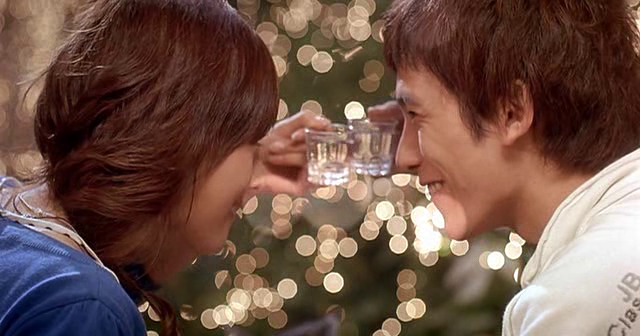
I remember spending the eve of 2010 watching Part 1 of the 20th Century Boys movie with my family while waiting for the clock to strike 12. This year turned out to be slightly different, in a sense that we managed to avoid watching a sci-fi adventure movie; opting for a frilly romantic comedy that didn't leave you wondering what the hell happened to its protagonist. The best part of it was that it didn't have an apocalyptic spin to it, so we didn't find ourselves distraught over the ending of the movie. All in all, we were better off closing the year on a light, positive note, contrary to how we started it.
Read More

Monday, December 27, 2010

Down the Rabbit Hole We Go - Part 1


"In the enfranchised mind of the scientific naturalist, the usual feelings of repugnance simply do not exist. Curiosity conquers prejudice."
- Bruce F. Cummings, Journal of a Disappointed Man (1919)
Let's face it, with the holidays in full swing, it's doggone impossible to sit down and write a decent blog entry, so I'll just throw in the towel and run with this little piece that came to mind after having another go at watching the Arashi 5x10 Concert with my sisters last night. I've had the opportunity to catch random clips of performances by idol groups in the past few years enough to know that I don't have the constitution of a fangirl to overlook pitch problems, disturbingly suggestive dance moves and atrocious clothing. But lest you say I judge too quickly, I'm all for giving these boys a fair shake.

It was in August of this year that mikautada generously supplied me with a selection of JE concerts  by SMAP, Tackey and Tsubasa, Arashi, KAT-TUN and NEWS, and so I attempted to go through them objectively, mindful of Ender's Girl's warning that I'm venturing on slippery slope; ever grateful to have my sister's commentary present in the background like an errant, unstable guide to a potentially dangerous  [could suck you into la~la~land and turn you into a mindless, spendthrift drone] excursion.

After eight or so grueling hours of [pressing the fastforward button on the remote,] watching my JE stash, scratching my head in disbelief and finding myself bursting in laughter at inopportune moments, I started jotting down notes,  making a list of things I've observed about this breed of "artists", in hopes of making my venture slightly legit.


The idea for this post was to provide a basic account of my 3-day adventure into JE territory, deriving inspiration from Charles Darwin's Beagle Diary and Marco Polo's travel diary. Problem is, I couldn't manage to watch any of the foregoing concerts/performances from start to finish, so this hardly counts as an in-depth review or study. It's actually turned out to be more of a compilation of the disgruntled ramblings of a person who couldn't wrap her head around what was going on half of the time and whose jaw kept hitting the floor after witnessing one weird spectacle after another; so what started out as a one-time "academic" quest, turned out to be more of a crazy adventure, or rather more like me, tumbling down a rabbit hole, (stumbling around in shock) discovering this strange new world of exotic (for lack of a better word), male creatures---the kind that hail from the land of Johnny's Jimusho.

After briefly going over the '92-'95 SMAP Concert disc compilation, it suddenly occurred to me that if Hikaru Genji was the Japanese equivalent of the band Menudo on roller skates in the 1980s, then SMAP would surely have to be  Japan's dorky, rainbow-clad answer to the NKOTB in the early 90s. Obviously, the idea to create multimedia stars was nothing new, in fact, it didn't stop there, because Johnny's Entertainment, as most people already know, would later come to manage six other bands that would take a bite on the country's music industry.

The music maker, the dreamer of dreams, the Pied Piper of little boys from that weird island country, Johnny's Entertainment is essentially a boy band factory---one that churns out sensational [bubblegum] talent this side of the world and for the most part, has been surprisingly successful at it. Off the bat I noticed how one need not be a good looking chap to become an idol; one need only have a distinct look and flavor, even normal would do, since they would eventually get made over anyway, once they debut.

Wearing anything from matching square suits, parachute pants, metallic vests, to psychedelic sweaters, fresh-faced youngsters would sing, dance and tumble on stage while hordes of screaming fans go ga-ga in a dark theater. Over time, they'll change hairstyles, wear [slightly] better clothes, support a distinctive image and get trimmed down to a more manageable number, but rest assured that (aside from the signature moves that recur in slight variations and the dodgy use of English words in concert promos) fans will continue to flock to stadiums and help sell out concerts.


Inside my head I'm breaking down,
Where am I now and why?
- Lyric Translation 1582 - 亀梨和也

It seems that things have not changed much in the last two decades, considering that the new crop of JE boys continue the age-old tradition of making girls squeal and making [most] boys uncomfortable enough to run towards the nearest exit. The only difference is now, they  not only entertain crowds through song and dance in colorful outfits, feathered boas, and sequined tops but they do it all  while staging a mind-boggling extravaganza that can only be compared to a three-ring circus. To date, I've seen artists from the Johnny's stable get hoisted up in the air like rag dolls swinging in the breeze; I've seen shirtless, young boys prance around on stage with nervous energy---a sight which could have been directly culled from a fujoshi's overactive imagination [or a pedo's technicolor dream]; I've seen androgynous young men swivel their hips and tease the crowd with their  [string bean] bodies and [criminal] sex appeal; but nothing could have prepared me for the grandiose and insane spectacle that was KAT-TUN's 2009 Break the Records concert.

Out of the recent batch of artists to come out of JE, KAT-TUN always struck me as the most flamboyant and stylized of the bunch. They don't break the mold so much as try to redefine it and therein lies a contradiction. I don't know if it's due to a conscious effort to distinguish themselves from the others or simply a marketing decision, but KAT-TUN for some reason, simultaneously appears to be the more experimental and edgier counterpoint to  the other boy bands of JE in terms of music and yet they're also the most theatrical, most  hyped up and idol-like come performance time. Oh, and they always come dressed with a costume-party in mind.

The actual singing or the live vocal performance is inconsequential---whether they hit the right note is no longer important---there's a thousand other attractions out there that will prevent you from getting hung up on auto-tune enhanced vocals. They're like rockstar wannabes, bubblegum pop advocates and ultimate stage entertainers all rolled in one. A KAT-TUN concert would not be complete without any fancy gimmicks,  showstopping performances and fanservice. This  one in particular had  its members zipping through the air and shamelessly flirting with their audience. In addition thereto, one member jumps off a hanging cage, plays an onnagata and believe it or not, gets drenched in public. Still, one member rides a motorcycle in a cage sphere while another flips the bird on an unsuspecting audience... all of these and more in Feles's 2-part Monster Review.

Observational Report #1: The Kamenashi Kazuya Solo 1582 a.k.a. Why Go to a Sentou?

Up, up and away
My sister, the KAT-TUN fan, was extra excited to watch this concert. Considering that I just spent an hour trying to appreciate Takizawa Enbujo, I wasn't really that keen on following it up with  KAT-TUN's  brand of pop [which, based on my limited exposure, has a punk-rock-hiphop flavor with a little sleaze thrown in for good measure],  so I only dropped in once in a while to verify if what was going on coincided with my shortlist of what to expect from a KAT-TUN concert and this is what I ended up with:

Moving stage, strobe lights and fountains  ✔
Flame throwers and fireballs ✔
Members sticking out tongue/licking lips ✔
Tanaka Koki scaring kids ✔
Kamenashi Kazuya exercising creative restraint x

By all accounts, it was a typical JE concert...at least until Kame turned up and performed his solo, playing the dual role of ill-fated lovers. I tell you, this  thing stopped me dead in my tracks. He just had to put all that theatrical experience from working on Dream Boy to good use, had to prove once again that he was under the tutelage of another JE boy who gyrates and thrusts his hips like there's no tomorrow....had to smear lipstick on his lips, had to brandish a sword like a frenzied fighter, had to take his audience on a magic wagasa ride; take flight and spin with sparklers. You see, he just had to. Without going into vocal stylings and strictly judging it by way of  production value, Kame's 1582 was nothing short of Fabulous. Outrageous. Stupendous. It was out of this world and sadly, simply insane.

There's an undeniable conceit to it that can only be attributed to crazy artistry but you got to hand it to the guy for performing it with such conviction. But what does it all mean? Having seen this concert a year later than most people made me privy to a host of conflicting opinions. Given the sheer extravagance of it all, it's no surprise that it's prone to be ridiculed but what's interesting is the number of interpretations and conjectures that came to light because of this solo. Some placed particular significance on the song title (see spaarklingwine & overduemuse), while others defended the performance out of love for Kame and came up with their own interpretation (see kvothe232).  As for me, I simply chalked it up to misguided and gratuitous showmanship.


The first section of this performance was rather easy to piece together---two lovers are separated at a time of war, the woman dies/is defiled and/or murdered;  man gets news of his lover's demise in the heat of battle and gets all fired up, enraged, and entangled up in scrolls (???)...okay, so I admit that I have not given it that much thought, but who would, after watching Kame get all wet and wild, eager to replicate Jennifer Beals's water dance on a live stage? Bet you didn't know that those water fountains could be used that way, huh. Bet you didn't expect Juniors to throw buckets and buckets of water (enough to drown a big rat) at their senpai either.

So what to make of this unique and exciting piece of performance art? Well, based on the video under examination, I think we can safely infer any or all of the following:

(a) The final act to the 1582 solo depicts man against the elements;
(b) The man called Kame is just way too hot to handle [which is why he was doused];
(c) Kame is possessed  by an exhibitionist demon and is undergoing a cleansing ritual;
(d) Kame is a very, very dirty boy, hence should bathe in public; 
(e) Juniors are dispensing payback against him for setting a weird precedent (the gold standard in staging an over the top JE concert piece).

*End of report on first and last attempt at watching KAT-TUN's BTR Concert dated 8/22/2010*

Experiment concluded.
Results inconclusive.
Further viewing is suspended indefinitely.

---------------------
Photos courtesy of kattun_kame -- KAT-TUN concert コンサート live kamenashi 亀梨和也
Additional photos taken from Dazed and Confused feat. Kame
Lyric translation to 1582 courtesy of JPopAsia and  http://trancekuja.livejournal.com/

Read More

Saturday, December 25, 2010

Holiday Buzz and Extra Clutter


Well, the holidays are here and I thought that I'd get more time to finish up all those draft blog posts I have had pending for a little over a month now but I could not have been more wrong in this assessment. As soon as December kicked in, life was abuzz with work, holiday preparations and Christmas shopping-- there simply wasn't enough time to mull over recent drama exploits especially when you're in the company of family and friends, let alone sleep as one should.  That being said, I do still plan to close the year with a few antedated posts which will be accompanied by some ill-conceived and sloppily constructed blurgs (provided I get some fansubbing assignments out of the way). For now, allow me to wish everyone the best this holiday season. And of course, for those who might be interested in expanding their drama collection or are simply planning on placing a few more shows on their viewing roster, here's an updated list of the stuff I have that's available for trade or "adoption".

Japanese Dramas
  • Atsuhime
  • Binbo Danshi
  • Bloody Monday 1 & 2
  • Byakkotai SP 2007
  • Byakuyakou
  • Cheap Love
  • Code Blue
  • Dr. Koto Shinryojo
  • Fuma no Kojiro
  • Galileo
  • Giragira
  • Gokusen 3
  • H2 Kimi to itahibi
  • Hanazakari no Kimitachi e
  • Hanbun no Tsuki ga Noboru Sora Live Action (Raw files)
  • Hagetaka
  • Jodan Janei
  • Jotei
  • Juui Dolittle
  • Jyoou no Kyoushitsu 
  • Keiji no Genba
  • Kiken na Aneki 
  • Koizora
  • Love Shuffle (Raw files)
  • Maou
  • Minami-kun no Koibito
  • Mioka
  • Mother
  • Muri na Renai
  • Nanase Futatabi
  • Pandora
  • Prisoner
  • Quiz Show 2
  • Regatta
  • Rescue
  • Ruri no Shima
  • Satomi Hakkenden
  • Shoni Kyumei (Raw files)
  • Sukeban Deka (Raw files)
  • Tantei Gakuen Q
  • Tokkyu Tanaka 3-Go
  • Ushi ni Negai wo
  • Uta no Oniisan
  • Yamada Taro Monogatari
  • Yoshitsune (Dvd format/avi)
  •  Zeni Geba

Korean Dramas
  • Bad Guy
  • Bad Couple
  • Cain and Abel
  • Chuno
  • Coma
  • Crazy for You 
  • East of Eden
  • Evasive Inquiry Agency (DVD format)
  • Goong S (a.k.a. Prince Hours)
  • Iron Empress (a.k.a. Empress Chun Chu)
  • Piano
  • Return of Iljimae
  • Robbers
  • Snow Queen
  • Star's Echo 
  • Strongest Chil Woo
  • Sungkyunkwan Scandal
  • Taereung's National Village
  • Thank You
  • The Devil
  • The Lobbyist
  • Time Between Dog and Wolf (DVD format)
  • Triple
  • You're Beautiful

Chinese/Taiwanese Dramas
  • Down with Love
  • Fated to Love You 1-19 (RandomFansubs has the rest up on youtube)
  • It Started with a Kiss 1-8 (incomplete)
  • Mischievous Princess (a.k.a Bratty Princess)
  • Romance in the Rain
Read More