Monday, March 26, 2012

Crossing Hennessy


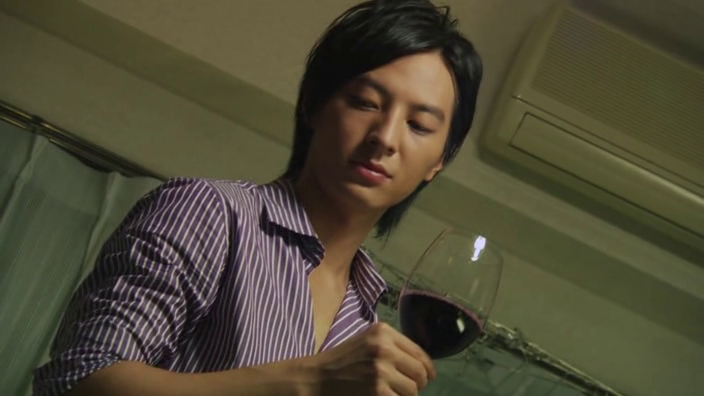
Easily one of my favorites from 2010, Crossing Hennessy is one of those movies that make for pleasant and easy viewing, having one of the cutest and probably most misleading trailers produced to entice people to see it. Be forewarned, it's not as romantic or funny as it was made out to be, but fans of Ivy Ho would no doubt still appreciate and recognize the said writer's style and fondness for metaphors in this latest offering. Another thing that might be of interest to viewers is that not only does this movie mark the return of Tang Wei to the big screen, it also happens to be Ivy Ho's second directorial feature.

*   *   *
Proving that a cup of tea, an egg tart and a mutual interest in mystery novels can be as good as any device to jumpstart a relationship, Crossing Hennessy is one of those love stories that decidedly leaves out much of the giddy romance in favor of brewing a more stable and organic relationship between the two characters presented onscreen. Typical of an Ivy Ho film, it explores an aspect of love with thoughtful regard to everyday, real-life circumstances, making it fairly ordinary despite its whimsical appeal. Light, thoughtful and quirky, it might not necessarily fit the bill of a typical Hong Kong romantic comedy, but it's certainly worth taking a look at for its simple and unpretentious treatment of what it's like for a person to let go and move on.

Opening with a low-key and uneventful first meeting, Crossing Hennessy brings together two people who at first glance appear to have nothing in common and follows them through a series of innocent encounters that would later allow them to form a bond  that's strong enough to help them make a decision upon reaching their own proverbial crossroad. Arguably more of a belated coming-of-age film than a romantic comedy, Crossing Hennessy makes a case for a normal, healthy relationship by pitting the mundane against the dramatic, with the intimation that maybe true love need not be so complicated nor toxic. 

You learn to let the small things go so that you can take a stand on bigger issues. That's how it goes.

Loy (Jacky Cheung) is a bachelor with no dreams or motivation. At forty, he still lives under the roof of his imperious mother (Paw Hee-Ching)  and is spoiled by his dutiful aunt (Chu Mi-Mi), content to spend the rest of his days dallying about, occasionally dreaming of his deceased father.

Set to inherit a family-owned appliance store, his mother believes that the only way for him to get his act to together is to marry him off to force him to think about the future. To accomplish this, his mother sets him up on another matchmaking session, this time with the so-called "queen of bathroom fixtures", Oi-Lin (Tang Wei), whose aunt and uncle own a shop on Lockhart Road. So Loy gets introduced to an equally reluctant Oi-Lin over dimsum and tea, where the chatter of their chaperones and go-between drown out the awkward silence that surround their firm resolve to part as strangers. They get through the whole affair without so much as exchanging a word but since their relatives were not the type to be easily discouraged, the two once again find themselves forced to be together.

After breaking the ice by openly admitting that they're not interested in each other, the two eventually settle on building an easy-going friendship, one that would allow them to humor their well-meaning relatives and lead them to come to terms with their personal woes---he's hung up on a recently divorced ex-girlfriend (Maggie Cheung Ho-yee) with whom he's reconnected with, while she's fiercely committed to lending support to a hot-headed boyfriend (Andy On) who's facing time in jail for several legal infractions.


Falling neatly under the category of slice-of-life cinema, Crossing Hennessy is a prelude to a love story wherein the romance between its two protagonists is merely hinted at rather than exhibited for public view. The film leaves out much of the amorous encounters and saccharine dialogue ever present in your run-of-the-mill romantic comedy and deliberately channels the viewer's attention to ordinary events and everyday objects as a testament to the fact that not all unions have explosive or fiery beginnings. Going against movie convention, Loy and Oi-Lin's relationship develop gradually, without warning---some might even be surprised by Loy's sudden admission of being in love when all signs point to a platonic relationship.

Indeed, love at first sight has no place in this film, neither do sparks or fireworks that burn bright and consume one's being. As many would no doubt observe, the pairing makes more sense from an intellectual standpoint, it does not blatantly appeal to the emotion, being a film without overt romantic gestures. It has a narrative that comes to a slow simmer; and as expected of any Ivy Ho Film, it's not an instant crowd-pleaser but more the type that lends well to multiple viewings, with some odd surprises in store. On the upside, it's rather craftily set up to propose thoughts on what makes a relationship endure. For example, it's been suggested that a woman in the long run would prefer a sense of humor over brute force and that a man who's truly in love would endeavor to do right by someone on his own accord. In this regard, Ivy Ho remains consistent with her body of work---whether or not you're a fan of hers, a majority of her films continue to explore love and its different dimensions.


In the sentimental wringer, Comrades: Almost a Love Story, time and chance play a crucial role in bringing two people together; in July Rhapsody, a secondary-grade teacher undergoes a mid-life crisis when faced with temptation and infidelity; while in Claustrophobia, two carpooling co-workers embark on an affair, made possible by confined spaces and proximity. With maybe the exception of Comrades, most of Ivy Ho's films suffer from a dearth of physical interaction but what this does in the long run is highlight the ever so subtle shifts in her characters' emotions and the steady resolve that marks each story's turning point. Crossing Hennessy best exemplifies her preference for this particular method even though it might not end up pleasing all her viewers. The point of contention this time around being that nobody really knows how and when love ends, more so, how it begins.

To a certain extent, this is really a story about personal growth and new beginnings, perhaps a bit more of Loy's than that of Oi-Lin's. Some might even lament its simplicity and lack of dramatic incident but the identifiable situations the the characters go through as well as the symbolism of some events integrated into a dream sequence or a particular scene all the more make up for it. Jacky Cheung makes Loy such an easy character to like and relate to while Tang Wei is as lovely as ever as the prospective match who eventually lets her guard down while conversing over tea. The chemistry is not explosive yet the easy banter between the characters provide a good fit and is in keeping with the movie's light, comedic tone.

--------------------- 
 Photo credits: Stormedelf at Asianwiki.comhttp://asianwiki.com/Crossing_Hennessy
Read More

Tuesday, March 20, 2012

Yonimo Kimyona Monogatari Fall 2010


Regaling audiences with bizarre tales for over two decades now, Yonimo Kimyona Monogatari  has often been referred to as the Japanese equivalent of The Twilight Zone---albeit dispensed in smaller doses following a standard five-story format and broadcasted yearly over at Fuji TV. If you're around my age, another likely comparison would be the 1995 remake of  the scifi series, The Outer Limits, except this show does not have any particular preference as to genre. It can cover fantasy and science fiction, sometimes even the paranormal or the occult, the only standing requirement for each segment is that the stories must have a "strange premise" with a corresponding twist, and of course, they have to be introduced by television host, Tamori, in his signature dark shades.

  *    *    *

Assembling a list of contemporary stars to appear in material based on original stories contributed by some of Japan's best-selling fiction writers (e.g. Kyogoku  Natsuhiko, Higashino Keigo and Miyabe Miyuki for this particular episode), Yonimo Kimyona Monogatari is the type of show that caters to a finicky, inattentive audience that prefers fleeting, inconsequential tales over the usual drama series format or the virtual spookfest that is Hontou ni Atta Kowai Hanashi.

With 4-5 stories crammed into a 2-hour special, it is categorically an uneven collection of vignettes that tend to fall short on either story or budget due to the basic constraints of its format which can either be a limited running time or an extremely ambitious story capsule. Most segments tend to have an abrupt ending and some may not make complete sense at all, but despite its many shortcomings [like its penchant for wonky opening sequences with foreign talent in tow], remember that this piece of television also has its share of gems. It's entertainment that transposes the traditional short story to a more visual, modern medium, and for as long as there are stories to tell, this program will continue to have its viewers.

Story 1 : The Nasty Door


In the first segment of this fall SP, destitute and down-on-his-luck Hikita Keiji (Eguchi Yosuke), who has lost his will to live, gets a chance to turn things around when he is invited to spend the night at a hotel that grants its guests eternal happiness. Where the hotel is located and how one gets an invitation no one knows, but as the urban myth goes, luck and success would accompany the visitor who's willing to steal the happiness that belongs to another for his own.

A well-constructed tale of myth and mystery, this story by Kyogoku Natsuhiko has the badges of a typical Yonimo Kimyona Monogatari segment, being self-contained, slightly predictable and yet complete in itself. Like any fairytale, it's increasingly clear that there's a price to be paid for every wish granted and what awaits Keiji is an unspeakable fate.

The dark green walls of the hotel suite and the other guests in period garb lingering in the lobby add to the eerie atmosphere and while the ending comes as no surprise it's worth noting that everything that happens in the story thereafter is foretold by an elderly gentleman (Sasano Takashi) who has similarly taken up the hotel's offer. 

Story 2: The First Step


Providing comic relief to an otherwise sad and cynical collection of tales, the second segment is basically a love story prompted by two gods and the elimination of a pet phrase. Fun and breezy, story no. 2 is perhaps the only segment that promises a light-hearted theme and delivers a happy ending, making use of the holiday season to deliver the message that love goes beyond any denomination.

Shinozaki Hajime (Ohno Satoshi) is a timid salaryman who has always believed in thinking things over and taking one step at a time. His overly analytical and irresolute ways prevent him from making a decision and this habit of his has also prevented him from advancing at work. His girlfriend (Tanaka Rena), whom he's dated for five years, is at the end of her rope, waiting for him to pop THE question. In a bind over his professional and personal life, two gods---the god of marriage (Ito Shiro) and the good of road safety (Endo Kinichi)---offer to help him. 

Story 3: Bookmark of Love


Twenty-three year-old Kuni (Horikita Maki) develops a crush on a young man (Takezai Terunosuke) who uncannily resembles Sally from the band, The Tigers.

One day, she follows him into a bookstore and sees him pick up Rimbaud's "A Season in Hell". Leafing through the book's pages, she discovers a bookmark. Thinking that the said bookmark belonged to "her Sally", Kuni impulsively writes down a note in an attempt to get close to him and is later thrilled to receive a reply, not knowing that she would soon be corresponding with someone who's long been deceased.

Drawing inspiration from films like Somewhere in Time and Il Mare, this third segment is a conventional mix of romance and nostalgia set against the sepia backdrop of 1960s Japan. The story plays with the notion of a love that transcends time, as the protagonist establishes an incredible connection with a kindred soul. The overall impact of this love story would certainly vary depending on one's exposure to material of the same ilk, for as short notes are exchanged in lieu of text messages, this is one tale that's actually more like a footnote than a memorable chapter.

Story 4 : The Instruction Manual on Murderous Intentions


The fourth segment concerns a former ad executive named Kitani (Tamaki Hiroshi)  who deliberates on murdering an old colleague (Tsukamoto Takashi) by making use of an instruction manual on murderous intentions.

Arguably an odd and roundabout tale of revenge, this dark comedy is a fictional representation of what it's like for an ordinary individual to decide to take a person's life. It's a meditation on the motive and means to murder, which in a way, includes the internal, if not moral, debate over the cost and effect of putting one's murderous thoughts into action. Filled with grim/violent/pathetically laughable sequences that detail the step-by-step process of acclimating one's self to the prospect of gaining the ultimate form of revenge, this adaptation of a Higashino Keigo story comes with animated illustrations, screen texts and public service announcements/reminders that feature instructions on the basics of murder.

Final Story : Burnt Offerings


Last but not least is another tale of revenge, this time involving a grief-stricken older brother's (Kagawa Teruyuki) crusade to avenge his sister's death. Coming to his aid is a mysterious co-worker (Hirosue Ryoko) who willingly offers the use of her "gift" to seek retributive justice from his sister's killer who still roams the streets.

Perhaps the most melodramatic of the five stories featured in this special, Burnt Offerings is in part a love story and a paranormal thriller all rolled in one. It has a rather tragic and somber tone to it, and whatever glimpse of hope that springs from the relationship that grows between the two characters is undermined by their objective to exact revenge on an unrepentant killer. The story has familiar elements to it that may make it seem a bit cliché but the competent performances of the leads convincingly translate the fear, uncertainty and loneliness that haunt these two characters and their shared mission.
Read More

Monday, March 12, 2012

Fuerza Bruta : Look Up


Since mid-February, almost every lifestyle column or event blog was abuzz and raving about Fuerzabruta, an interactive show that originated from Argentina and is currently being staged at a make-shift tent within the grounds of the Manila Hotel until March 26. Hailed as a one-of-a-kind theatrical experience, locals who caught the show were quick to throw words like "amazing, "trippy" and "mindblowing" to describe it, and so like any other curious, entertainment section-reading individual who bought into the hype, I decided to go and do a look-see last Tuesday not knowing that there was such a thing as a Girls' Night version (sigh*). 

Anyway, the show started promptly at 8p.m. but since I arrived thirty minutes early, I was able to down the first of two complimentary drinks that came with the arguably expensive ticket price. As for the actual show, people were led to a dark room where they were expected to move around under the watchful eye of stagehands as the performers moved from one side of the venue to the other. 

Going by the promotional material, audiences were encouraged to clap, cheer, shout and dance to this [supposedly] 360-degree spectacle that fused heart-thumping techno music with hyper-kinetic dancing, aerial stunts and psychedelic (dare I say psychotropic?) visuals. 

The show in itself was different from your usual sit-down theatrical event, it was gimmicky and avant garde, however, I highly doubt that there's a deeper meaning or message that was supposed to be imparted. From what I've seen, Fuerza Bruta appears to have been designed to break through the confines of language and culture by encouraging everybody to participate, celebrate and even get slightly wet under seizure-inducing strobe lights in a performance art extravaganza that more or less doubled as a rave party with a time-limit.


One of the highlights of the show was the part where people craned their necks to see female performers frolic and glide across a shallow hanging pool that slowly descended and hovered about a foot over our heads. They created ripples, formed silhouettes, and teased the audience through a tough yet thin layer of plastic that in turn showcased the diaphanous fabric that barely covered their figures. Now of all the acts presented, this one came quite close to achieving that dreamy, other-worldly atmosphere...that is until you start noticing all the oggling and "interactive" pawing that came about it.   

At the risk of sounding like an old fogey, I spent the whole hour in awe of the seemingly senseless and whimsical activities before me whilst trying to avoid eye contact with the performers who, from time to time, would roam around and induce people to dance in a frenzy and/or smash styropor boxes of tissue-confetti on some random guy's head. So between sidestepping soggy [toilet or Japanese?] paper and trying to figure out how all the sequences to this production fit in with the man on the treadmill, I couldn't help but feel duped. Had I read  Charles Isherwood's theater review, I would have thought twice about rushing off to see it.

Fuerza Bruta is the kind of show that requires an open-minded audience---in particular, the highly excitable and free-wheeling type that wouldn't mind staying up on a weeknight. It has a concept that would no doubt appeal to young, hip, party-goers who chase after fads or else, not-so-young, slightly inebriated individuals who chugged enough alcohol or gogo juice to dive into this short (55 minutes to be exact), not-so magical, mystery tour. 

Was it a unique, one of a kind experience? 

For sure. It assaulted my senses with brute force but as one act gave way to another, its overall impact drastically weakened with the passing of the hour. At the end of it all,  let's just say that I was more than happy to get home, hit the sack and have my own weird dream without having to be in a room full of strangers.

--------------------- 
Photos by Niña Palileo, amateur photographer/videographer. 
Images taken during the actual show held last 9 March 2012 at the Manila Hotel Tent.

Read More

Monday, March 05, 2012

A Night at the Opera

They say that opera is an unknown, if not unappreciated, art form in the Philippines, so in an attempt to rectify this situation and introduce this classical medium to the public, the Cultural Center of the Philippines in cooperation with equally minded organizations such as the Opera Guild Foundation of the Philippines, Music Artes of Jay Glorioso and the Rustan’s Philippine Italian Association have decided to produce three operas that will be presented at the CCP main theater this year.

First up would be Guissepe Verdi's La Traviata as scheduled this March, followed by Giacomo Puccini's Madame Butterfly this coming June and finally Rossini's The Barber of Seville in July.
*    *    *
To cut to the chase, I'm no art or theater afficcionado but I was willing to give this long-standing tradition a try---even if I had trouble finding someone to come with me that I ended up dragging bringing my mother along  and  was eventually accosted by the smell of expensive perfume and liniment (think BenGay and Tiger balm) wafting along our balcony seats just to see La Traviata as performed by artists from the Daejeon Opera Company.

I always wondered who came to these events, not realizing that aside from the usual suspects who were composed of patrons in old lace, long gowns, pearls and had coiffed hair, you also have family members who support young, aspiring artists who pursue a career in dance or music, not because it's a lucrative career but mainly for the sheer love of it. Seated to my right was the proud family of one of the chorale singers from the University of Santo Tomas and to my left were the friends of someone who I assume was part of the philharmonic orchestra that provided the musical accompaniment.

They played the national anthem, flashed a short synopsis of the first act; the curtain was drawn and we were off witnessing an ostentatious party held at Violeta's Paris salon.

I had a vague notion of what the story was about so even though it was sung in a foreign tongue by artists in frilly outfits amidst a soporific backdrop of billowing curtains, candelabras and a chandelier, I was prepared to sit through this tragic tale of a courtesan who gave up everything when she fell in love only to be needlessly rejected and humiliated by the man she loves.

So after three acts and about four intermissions, I can proudly say that I survived my very first opera without falling asleep, thanks in part to the offhand yet entertaining comments of a little boy who kept asking his father the following questions while the rest of us were waiting for the courtesan to die already---Is Violeta going to die? What is she going to die of? How come people are applauding her when she's dying? 

As for me, the question on my mind at the time was, "Is La Traviata the source material for Greta Garbo's Camille and is Baz Luhrmann's Moulin Rouge! a loose adaptation of it?"For surely, not all courtesans end up dying of consumption nor do all spurned lovers end up throwing a wad of money at at the said courtesan insisting, "I owe you nothing" in public.

Turns out I was wrong on both counts as a quick search on wikipedia revealed the above two productions as mere adaptations of an Alexandre Dumas novel called The Lady of the Camellias Apparently it was first turned into a stage play in 1852 and was later put to music by Verdi, then  made into a film by George Cukor in 1936 and finally became an inspiration for the 2001 musical that starred Nicole Kidman as the ailing courtesan who fell in love with a penniless writer. I guess what I'm getting at is that a good story really does stand the test of time and while people might not immediately take to the opera, it should at least be conceded that these type of productions do tell familiar tales covering universal subjects that would appeal to anyone... if only given a chance.
Read More

Friday, January 27, 2012

Copyright Wars


Now, for the first time in history, we have the technological capacity to save all those works in digital form at a tiny cost and, through the Internet, easily put them at the fingertips of everyone, anywhere in the world
- Pat Choate, Hot Property

About this time last week, I was making a list of the fall jdoramas that I didn't have the time to see and was doing an inventory to check whether or not I had all the episodes to the dramas currently languishing in my computer's hard disk. I also made a mental note to set aside some time for dramas that weren't on my to-watch list but were nevertheless already subbed in their entirety only to hold off obtaining a copy, thinking I could easily gain access to them through direct download links... oh boy, was I wrong to think this.

Looks like I have to wait a little longer before I can watch Kame morph into Kokey's distant relative or see Chiaki Kuriyama play wife and spy by varying the application of her eye makeup. I should also give up the idea of ever getting to watch Sakurai Sho play butler to a rail thin Kitagawa Keiko, whose acting, by the way, cannot possibly get worse after landing the role of a pouty, anemic, Plain Jane in Paradise Kiss. How do I waste my time now without all these (ahem*) quality shows?

Ah, 'tis a shame, indeed.
 *   *   *

Just when I though that the online community scored one for the team when the U.S. Congress decided to postpone any action over the proposed legislation against online piracy, the Feds and the Justice Department managed to strike back by cracking down on the filesharing site mammoth, megaupload, thus strongly sending a message that the fight is far from over. And although the owners of the said site deserve little or no sympathy for amassing millions based on a business model that clearly violated copyright laws, I can't help but feel bad thinking about all the material that fansubbers and raw providers have guardedly made available online, now lost and inaccessible. These storage sites have become an integral part of the Asian drama community in the past few years, they provided an alternative to peer-to-peer file sharing which can take a while if you missed out on the swarm.

I may not have been following the issue closely (I'm sure there's a student out there preparing a thesis on this very topic), but it's interesting to note how recent moves to enact SOPA/PIPA/ACTA appear to be nothing more than the latest installment of what some critics and commentators would refer to as Hollywood's continuous attempt to protect the interests of copyright holders (i.e. their right to make money and have sole discretion over certain works). Watching the Keiser Report episode on SOPA made me realize how today's debate regarding the controversial bills reflected the same core issues identified with the film and music industry's fight against piracy---from the early days of the VCR, to the rise and fall of Napster, up to the successful lobbying of studio execs  for the Bono Act, which in turn extended the copyright term of commercially viable works.

As delineated by author of Hot Property, Pat Choate, this really is an ongoing saga of two clashing cultures and belief-systems, a battle that is alternately fought in the federal and international stage. In an age where information can readily be obtained at the click of a mouse or a mere touch of a keyboard, copyright holders would like nothing more than to regain absolute control over the distribution of their work, while public domain advocates, in contrast, would like nothing more than to protect the untrammeled exchange of ideas in cyberspace to foster innovation.

It's a dicey situation for sure, one which might not readily find a solution, however, at the moment, extending the breadth and scope of intellectual property rights enforcement as suggested would mean imposing a form of regulation which can easily border on censorship and negate the established concept of fair-use. I think people in general are not opposed to the idea of protecting intellectual property rights, it's just that technology in itself is quite the game-changer, and as such, the old rules don't apply. The challenge therefore is to come up with a new model, a new system, hopefully one that works without having to take us a step backward.
Read More

Monday, December 26, 2011

Battle Royale 2nd edition

As you may already know, I bought a first edition copy of this novel a few years back at National Bookstore Cubao (the one that's beside Gateway Mall and a few steps away from Breadtalk) and was taken aback by how affordable it was. English translated works by contemporary Japanese authors would normally be more expensive and hard to find, so to say that I was ecstatic to get my hands on this Japanese bestseller at the cost of a John Grisham or Nicholas Sparks novel would be a fairly accurate description of how I looked at the time as I made a beeline for the cash register.

Of course, given its price, the book was not without its faults. For one, it was printed using machine-finished paper, the kind that people would call an improved newsprint, while the cover had a matte finish instead of being glossy. As for the contents, it was edited in a way that can be quite confusing. Without even going into my issues regarding syntax, I remember certain chapters wherein some of the characters' names were inadvertently mixed up and if you're the type who's not used to reading and hearing oriental names, the inconsistent reference to a character's first name or last name to signify his/her relationship or familiarity with another character can slow a reader down. It's a hefty book which consists of over 600 pages, so keeping track of 42 students engaged in a military program where their lives are at stake can be quite a challenge especially if you read this over an extended period of time. 

Roughly a year after buying the said book, a new paperback edition surfaced at Fully Booked. Like most books that line this elite bookstore's shelves, this edition was far more eye-catching than the first. It had whiter pages and the publisher obviously bumped up the standard paper grade. It would also cost you a bit more at Php680 to get the new and improved version. 
 
Given my obsessive/compulsive need to see whether or not this edition was indeed better than the one already in my possession, I eventually bought a second copy, but not until the price spiked up to Php899 (oh wow, lucky me). Apparently, there was enough reason to jack up the price due to recent comparisons made between this Takami Koushun novel and crossover hit, The Hunger Games which would in turn explain that yellow, round sticker on the cover that advertised this novel as "the original survival game".

Fortunately though, all the positive buzz about this edition turned out to be true. It's still a hefty book but at least it is better edited and the overall presentation thereof, including the use of a larger font for the text, makes reading it an easy if not enjoyable experience. As an added bonus, the second edition includes translated interviews with not only the author, Takami Koushun, but also the director of the film adaptation, Fukasaku Kinji and a foreword from Road to Perdition writer, Max Allan Collins. The section on Fukasaku is relatively shorter than that of Takami's, being an old movie promo interview, but it still makes for an interesting read since the additional material touches on the creative process, the inspiration and the intent behind the written and cinematic versions of Battle Royale.

So is it worth to cough up the extra cash to get this edition?

I guess that all depends on how much you value reading a well-edited text. If you're unfazed by a few typographical errors and have a good mind to read and understand the words in the context that they're meant to be understood, then the first edition would do the same trick, especially if you're budget conscious.   
Read More

Saturday, December 10, 2011

Save Me, San Francisco : Train Live in Manila


We've had a lot of foreign artists over this year and though my sisters and I made a number of plans to catch some of them perform, we never really managed to watch anything because of our conflicting schedules. Most of the concerts were scheduled on a Sunday or a weekday---which meant braving traffic if you're coming from the other side of the metro and/or rearranging your work itinerary just to get to the venue in time for the concert, which in turn meant that you would really, really have to like the artist or group that's performing to go through all that trouble. I didn't think I'd get to watch Train on their second visit to Manila but luckily, one of  my friends decided to make a night out of it, so I ditched my students (scheduled a make-up class, actually) and made a beeline for the coliseum after a boring day at the office.

I half expected the place to be full, maybe not filled to the rafters like the Jason Mraz concert, but I at least hoped for a decent turnout so that concert promoters can get the band to come back and perform in the future. There was a sizable crowd at the Araneta coliseum, it wasn't empty but it wasn't full, but given that everyone's in a mad dash to keep their expenditures in check for the holiday season, I kind of understand  why the Filipino audience couldn't have given this band a better reception.

Anyway, I felt like I needed a break so what better way to reward myself than to watch one of my favorite adult-contemporary rock bands in concert?


If memory serves me right, I was a sophomore in college when Meet Virginia hit the airwaves but it wasn't until Drops of Jupiter came out in 2001 that I truly became a fan. To this day, my favorite Train album would still have to be My Private Nation, with Save Me, San Francisco coming in at a close second.

I find Train's music easy to listen to and sing along with, and while not being insanely popular as other artists before Hey, Soul Sister became a huge hit, songs like Calling All Angels and When I Look to the Sky tend to stay with you and resonate. I've been keeping my fingers crossed for a comeback ever since their single Ordinary was featured in the Spiderman 2 soundtrack, and though never in my wildest dreams did it occur to me that their ticket to mainstream success would come in the form of a sickeningly foppish jingle, I guess I should still count myself lucky that they're out and about.

The concert was supposed to start at 8 p.m. but front act, 6-cyclemind, came on stage about a half hour late and didn't finish their set until a few minutes before 9 p.m. After that, we heard a train whistle/horn and Train opened the show with Parachute, followed by If it's Love---a love song dedicated to their loyal fans. The band then proceeded to play hit songs from their previous albums such as Calling All Angels, Meet Virginia, Get to Me and She's On Fire before launching into a Journey song with one lucky girl, who's obviously no stranger to singing such a karaoke staple.

Being my first Train concert, I really had no idea what to expect, so it was a pleasant surprise for me to see Pat Monahan and the band go out of their way to interact with audience members. I had a lot of fun watching the second batch of Manila Trainettes compete for a signed guitar and pretty much turned green with envy when the frontman jumped into the crowd and mingled with those in VIP and patron seats while singing Marry Me. At this point, my friend looked really disappointed, being someone who loved to document every event with a video or picture, but there was no helping it, since we were stuck with Upper Box A seats.

I tried to console her with the fact that the band sounded great from where we were seated, for it's a fact that one of the many downsides to having front row seats is that you don't get to appreciate the full sound of the band. I'm compelled to sour-grape a little, sure, but usually when you're situated near the stage, one of the instruments end up sounding louder than the others or the lead singer's voice get drowned out by the accompanying sound.


Since this was the Manila leg of a tour to promote their fifth album, Train played a bevy of songs which included the title track, Save Me, San Francisco, the Coke jingle, Shake Up Christmas, as well as Hey Soul Sister, I Got You and as mentioned earlier, Marry Me (though not in that particular order). For their encore performance, Train treated the crowd to Words and of course, the now classic, Drops of Jupiter---and with that, the concert was over. It lasted a little over an hour, which is why my friend's sole complaint was that she wished they threw in a few more songs, made the concert last a little longer.

Overall, I must say that I had fun at this concert. So much fun that I came up with a couple of resolutions; the first being that I should endeavor to get better seats for their next concert and the second would be to get more people to see them perform.

We might not have been near enough to get a decent picture but the music alone was worth the price of admission.

P.S. Being the stingy, fickle person that I am, it goes without saying that the above resolutions are contingent upon whether or not I'll dig their 6th album. Hopefully by then, Pat would've gotten himself a haircut and/or had enough time to run a comb through his hair.

---------------------
Concert pictures taken by Kris Rocha for Dayly Entertainment.
Read More