Saturday, February 18, 2017


As far as holiday features go, Watashi ni Unmei no Koi Nante Arienaitte Omotteta is like that Hallmark romantic movie that one would occasionally indulge in and actually enjoy without the need to over analyze things. Sweet, warm and comforting in its predictability, it ticks all the boxes needed for a satisfying romantic comedy, right down to that premature wedding proposal, under the sponsorship of a popular jeweler with a flagship store in Motomachi. It's a neat and uncomplicated love story, anchored by charming performances from its lead actors who exude a natural rapport, making the supposed transition of the characters from friends to lovers a seamless development.

A delightful, romcom puff piece, this television special has characters that meet cute, fall in love, and surmount superficial conflict to presumably live happily ever after, under the warm glow of a Christmas tree. All things considered, it doesn't introduce anything new to the genre but it's cheeky enough to acknowledge its own trappings and cute enough to tide over any viewer who's experiencing heavy melodrama fatigue.


Shirano Riko (Tabe Mikako) is a career-driven, love game creator who gets commissioned to design a mobile game for an app development company that's looking to expand its female market. She meets the curt and condescending CEO, Kurokawa Seichiro (Takahashi Issei)---who initially ridicules the concept of cultivating unrealistic female fantasies but later relents to changing his attitude and approach, under Riko's guidance, to capture the attention of project leader, Momose Haruka (Oomasa Aya).

Riko sets Kurokawa to work, schooling him in romance inducing "patterns" found in trendy dramas and encouraging him to mimic and test out the behavior of the stereotypical male characters in her games in order to to determine which one would set Momose's heart aflutter. In acting as his dating guru and wingman, they become fast friends. They start talking about things that matter in between planning their next course of action as they continue on with the love and relationship mentoring.

When Kurokawa swoops in with impeccable timing to save Riko from an embarrassing situation, she becomes acutely aware of her growing feelings for her timid mentee. She's taken by surprise and simultaneously torn when all their preparations yield a positive response from their once oblivious  and elusive co-worker. 


The setup for the show is nothing new but writer Oshima Satomi makes clever use of poking fun at trendy dramas and shoujo manga tropes without necessarily dismissing the reasons behind why they're so popular to female viewers and why such story devices endure. All the references to male stereotypes and variations to certain scenarios are done in good humor with the kind of self-awareness  and self-deprecation that acknowledge their absurdity. But no matter how repetitive or contrived they may be, the show ultimately rises to the defense of such characters and situations, recognizing their power to enthrall and inspire, as can be gleaned from Riko's rebuttal of Kurokawa's flippant attempt to ridicule her work at the beginning of the program.   

Watashi ni Unmei no Koi Nante Arienaitte Omotteta pays reverence to the romcom formula by going through the same motions of any such love story, selling the magic of romance even as it attempts to temper the fantasy. The show does not veer away from audience's expectations, opting for the most conventional ending, with the show's last fifteen minutes providing the most clichéd resolution to an otherwise decent and well done romcom.

The moment Riko blurts out her feelings, the show goes on autopilot to reach the anticipated ending. Running through decorated, tree-lit streets, across a famous shopping district, a lighted ring box would await our once loveless heroine. It's not a question of whether or not Kurokawa and Riko get together (because they do) but how they get together that will truly capture your attention. There's a lot to love about the said journey for the show excels in building upon light moments with honest dialogue to carry the scenes. The more elaborate and comic attempts at initiating romance are likewise memorable, of which there is Kurokawa's hilarious yet unsuccessful attempt at emulating character types and an all-night viewing marathon of a capsule, 90s-inspired trendy drama with Riko providing live commentary as an added treat. It's not perfect but it's good enough, in terms of viewer satisfaction, it's hard to find fault in it. 


RATING: 
ENJOYABLE IN ITS PREDICTABILITY
CHARMING LEADS
CAPSULE TRENDY DRAMA
POKES FUN AT SHOJO MANGA TROPES


Read More

Friday, December 30, 2016

Fragile (2016)


Japanese medical dramas are often an indictment of the country's health care system and in this particular case, Fragile does not veer away from the norm. It's not about medical marvels or unusual cases, it doesn't focus on one person's acquired skill or acuity but instead prefers to emphasize the need for data collection and analysis. It does take a page off the Doctor X playbook in terms of throwing shade at the apparent incompetence of health workers who either cut corners or get too complacent with their work, but it also shares the same flaw as its popular counterpart in the sense that its main character is not half as interesting as the other characters around him.

Fragile adds a curmudgeonly pathologist to what appears to be a growing roster of ace doctors who could do no wrong. Kishii Keichitaro (Nagase Tomoya), is the lone pathologist in a university hospital full of doctors in a rush to treat patients without obtaining a conclusive diagnosis. He defies convention by refusing to don a white coat and foregoing idle pleasantries, thus drawing the ire of medical practitioners with his arrogant, holier than thou attitude of declaring his findings to be 100% correct and unimpeachable. Such assertion, though closer to the truth than, say, a surgeon that never fails, does very little of convincing his colleagues to heed his advice and exercise caution, resulting in a number of mishandled medical cases exhibited in the show's 10-episode run. 


The series delves into the unacceptable occasion of having doctors dismiss serious medical conditions as minor ailments, erstwhile prescribing the wrong medication for ordinary ailments and diseases. Just about every doctor in the show gets it wrong, except of course, for the maverick pathologist who insists on finding the underlying cause of the patient's condition.  It's not exactly House M.D. but it is a medical show that champions clinical pathology and its role in medical diagnosis and treatment.

Personality quirks and righteous speech aside, Kiishi, as played by a dour Nagase Tomoya, does not make for a compelling lead character. The show extols the commitment of Kiishi to his profession but the jdrama simply gets more mileage when the story is told from the perspective of the patients who fall victim to the system. Very little is said or known about the man that heads the said pathology department aside from the given information that he was an attending physician  prior to being mentored by a naughty senior pathologist (Kitaoji Kinya) and that he once had a physical relationship with his former classmate (Koyuki), with whom he has forged a friendship. 


Far from being the voice of reason or the heart of the show, the series conveniently wanders away from Kiishi and rests it sights on his young team composed of an efficient lab technician named Morii (Nomura Shuhei) and a trainee doctor named Miyazaki (Takei Emi). They're the ones that have sufficient story arcs wherein the former is faced with the opportunity to abandon his present station in pursuit of a lost dream, while the latter is forced to reassess and shed old habits to suit her chosen discipline. Furthermore, it's their exposure to the patients that taps into the emotional core of these harrowing stories of negligence and lack of empathy in the medical field. 

Fragile hits its sweet spot when it manages to convey the human interest story within its quasi-medical procedural shell. The most memorable cases are the ones that hew close to reality and played less for dramatic effect but more for their honesty. The most powerful scenes involve---a quiet moment that passes between two young men contemplating their respective fates; a young woman frantically flipping through a notebook trying to offer information on procedures performed on a baby in need of medical attention; and a medical representative privy to the fact that the trial drug she's been peddling is not a miracle cure. 

The show doesn't skirt around the fact that patients die and doctors who are at fault do not get demoted or get slapped with malpractice suits. It doesn't delve into the science of pathology but the concept and principles behind it, which makes the series easy to watch but hardly essential viewing. Kiishi's platitudes are kept to a minimum and the show pretty much does away with saves or surgeries akin to a Hail Mary pass. Miyazaki ends up doing way too much work for a trainee to the point of interfering with protocol but accuracy and realism rarely go hand in hand with these type of shows anyway. 


RATING: 
ANOTHER BLAH ACE DOCTOR 
SUPPORTING CHARACTERS HAVE BETTER STORY ARC
NO MIRACLE SURGERIES
TRAINEE PATHOLOGIST DOES EVERYTHING

Read More

Sunday, November 27, 2016

Tenshi to Akuma (2015)


In Tenshi to Akuma, a female cop and a private lawyer, working under the auspices of the prosecutor's office, make up an ad hoc division of the police charged with reviewing unsolved cases. They go over the facts and sift through witness testimony in order to identify and facilitate the filing of criminal charges against the actual felon who has, for a time, eluded apprehension.

Makita Hikari (Gouriki Ayame) is a rookie officer, who was initially placed on active duty in consonance with a national program designed to increase the participation of women in law enforcement. After a short and unremarkable stint in homicide, she finds herself reassigned to doing clerical work, demoted to shelving case files in the Unsolved Cases Unit. Joining her as a deputized officer for the prosecution is Chajima Ryunosuke ((Watabe Atsuro), a sly and unctuous private practitioner who initiates the reinvestigation of cold cases on file. Together, they make a rather awkward, not to mention questionable, crime-solving duo with the young wide-eyed optimist insisting on swaying people to do the right thing and the cynical yet seasoned member of the bar electing to offer a plea bargain at the drop of a hat.


The curious thing about this show is that it's not a legal drama nor is it a crime procedural---the series is in fact built on amateur sleuthing through chronic, off-site interrogations of persons of interest. Unlike Cold Case: Shinjitsu no Tobira, the characters in this series are not driven by a new lead or the discovery of new evidence to reopen investigation, instead the show takes stock of select cases which fit the overarching concept of portraying how human beings can be duplicitous creatures. For this purpose, it concerns itself with uncovering the truth beneath the lies and distinguishing the so-called angels from the demons, calling attention to the unofficial use and status of plea-bargaining in the Japanese criminal justice system by showcasing the benefits and potential dangers attached to such practice.

Crafting stories around proposed and/or pending legislation is one unique feature of Japanese television. Whenever a change in government regulation is introduced or an amendment to the present economic or judicial system is proffered, one can more or less expect a corresponding drama series using the said controversy as its focal point. Productions of this sort belong to a broad spectrum---the really good ones can bolster public debate and discussion, while the crummy ones resort to fear mongering and blatant propaganda. Entries in this genre range from the highly fictional (Majo Saiban, Soshite, Dare mo Inaku Natta) to the profoundly moving (Hagetaka, Tetsu no Hone) and this is something that you can only find out upon actually watching the series.

Due to its episodic format, Tenshi to Akuma is middling in comparison to social dramas that herald change and call for introspection. The series just doesn't have a definitive point of view or insight on criminal plea bargaining. A majority of the episodes appear to favor plea bargaining by producing a favorable outcome to every scenario wherein past crimes could not be prosecuted without soliciting the cooperation of key persons involved in the act sought to be punished. On the flip side, it also allots time to present the lack of transparency in plea bargaining negotiations and the derailment of justice brought about by securing false testimony, but these episodes come out weaker despite being the main attraction of the story arc. Furthermore, the creation of the special division makes no sense, especially when the proponent has bones in his closet and the supposed muscle of the team is a skinny young woman with no field experience flashing a badge. 


What's good about it is that the series presents an assortment of cases that provide a cache of differing means, motives and opportunities for the commission of the nine crimes investigated. The guesswork is fair and the best episodes involve sympathetic characters driven by self-preservation and acted without premeditation. The top half of the series is serviceable and mildly intriguing with men and women equally represented in their capacity for violence and display of malice.There are a few unexpected twists and a good deal of misdirection for certain episodes but they don't work as well if the viewer is keen on checking the runtime or spotting familiar actors.

Needless to say, one will watch this show because of the cases and not because of its main characters for there is nothing particularly dynamic about the partnership. Makita and Chajima start off as two strangers that have to temporarily work together and they remain as such long after their professional work is done. This can be construed as both an asset and a handicap of the series. The absence of any personal drama or emotional attachment between the characters allows viewers to focus on the mystery at hand, but this also means there's less incentive or push to watch the episodes consecutively, since there's no reason to be invested in such characters and each episode is a complete story in itself. Also, the female lead lacks distinction when pit against the suave yet smarmy delivery of her co-actor. To be honest, the part could have been played by any other young actress and it would not have made any difference. 


RATING:
ASSORTMENT OF CASES
FAVORS PLEA-BARGAINING
BLAND FEMALE LEAD
BORING STORY ARC

Read More

Saturday, October 15, 2016

Dias Police: Ihou Keisatsu (2016)


Dias Police conjures up Tokyo as a city teeming with illegal immigrants, living on the fringes of society under the protection and guidance of an underground government. By procuring the services of such government, undocumented aliens, political refugees and criminal fugitives alike get a new lease in life, finding for themselves a safe haven on foreign soil. They coexist and thrive in one district, following certain rules of conduct, forming a community that looks after their own.

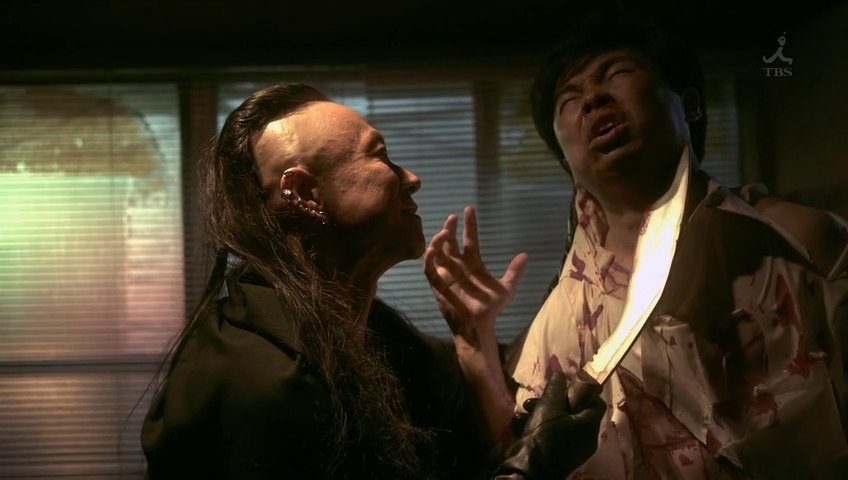
Peace and order is enforced by one man named Kubozuka Saki (Matsuda Shota), who plays the role of trouble shooter, dispute broker, neighborhood patrolman and criminal investigator. Widely recognized and referred to as the sole member and self-appointed chief of the dias(pora) police, Saki investigates and responds to any incident involving any member of their community. He identifies malefactors who pose a threat to their way of life and occasionally puts himself in harm's way just to save those in his ward. His duties range from giving street directions to the elderly, to facing off with hired assassins and gang members, to catching the culprit behind a string of murders that specifically target foreigners. Along for the ride is his sidekick, Suzuki (Kenta Hamano), a former bank employee who's on the lam for allegedly embezzling funds.


The series basically follows Saki and Suzuki on the job and on the trail of unsavory and dangerous characters in five cases served up in two episode installments. What sets this apart from other dramas is that it touches upon delicate issues that one won't normally see on prime time television and refrains from making any grandiose lectures, allowing each episode to speak for itself. The cases dealt with are gruesome and lurid in nature---the show features organ harvesting for profit, human trafficking, black market trading and hate crimes, all in a span of ten episodes. These scenarios are presented with honest brutality, often mitigated by some form of hilarity, in addition to some ridiculous maneuver on the part of the dias police that would send the bad guys running. The outcome of each incident is often oversimplified to the point of incredulity but each episode has enough disquieting imagery to hammer in the injustice, hostility and peril that these illegal immigrants face on a daily basis.

As a dark comedy that indirectly castigates the country's insular attitude, Dias Police essays an alternative to a homogeneous society by showing the potential of a diversified community. The series tries to bring this vision to life by having a supporting cast of foreign actors converge in a restricted locale, exemplifying a melting pot of cultures and ethnicities. Furthermore, the overall set design has a retro-ghetto vibe to it that does not lend itself to a specific time period which deceptively makes the show feel current without committing itself to a specific time frame. It has a unique look which is dingy but whimsical, where back-alleys and seedy rooms give way to a specialty restaurant abuzz with friendly folk, and crime scenes are paled by a roof deck where a replica of the Statue of Liberty looms above a group of women doing basic yoga poses.


No matter how serious or dire the storyline gets, or how many trigger warnings it may set off, the show is simply unable to shrug off the comic attributes of its source material. And while it has its share of human scum and violent thugs, there are also numerous characters in it seemingly lifted from the pages of the manga that make the show skirt reality. The sickle-wielding female enforcer, the conspicuously dressed and inked assassin, the large-nosed male porn-star wannabe and the silver-haired xenophobe leader are just some of the characters that make this series a tad outlandish and laughable. Combine that with the ways in which the only police officer in town comes to the rescue armed only with his wits and the odd household item (e.g. hand drill, mouse trap and a lighter), Dias Police tows the line between crime drama and satire, and it doesn't work all the time since over the top acting inevitably undercuts the drama. 

Another thing that might bother viewers is that the series ends without revealing the true identity of its protagonist when such information was treated to be of some value or, at the very least, a point of interest in the story. The episodic format provides very little by way of character exposition despite constantly showing Saki in action. His roots remain a mystery and all that is known of him is that he speaks several languages and is resourceful enough to perform his job effectively. It has been alluded to that he arrived in Japan as a war refugee, but beyond that, the question of how and why he came to be the dias police does not appear to be of particular concern to the series. 


RATING:
IMMIGRATION ISSUES
COMIC BOOK VILLAINS
DIVERSE SUPPORTING ACTORS
TRIGGER WARNING

Read More

Sunday, September 11, 2016

Strawberry Night SP (2010)


Strawberry Night is the first book in Honda Tetsuya's popular detective series which features a hardboiled female detective, constantly at odds with the rigid, patriarchal system of her chosen profession. Adapted into a standalone special in 2010, this 2-hr feature provided audiences a taste of the kind of brutal and gruesome cases that comprise the author's brand of macabre fiction and similarly introduced a dark and complex heroine in Lieutenant Himekawa, whose single-hearted focus in her work can both be admired and despised. It also marked the beginning of a string of adaptations which came out in the form of a television miniseries in 2012, followed by a full-length motion picture in 2013 entitled, Strawberry Night: Invisible Rain, and then capped off by another t.v. special on the characters following the events of the film.

In 2016, the book, Strawberry Night, was translated into English, published under the title, The Silent Dead. With the book now available to a wider audience and the series having reached the end of its run, it's as good a time as any to revisit the special and see how it stacks up against the other made for t.v. offering in the series.

*     *     *
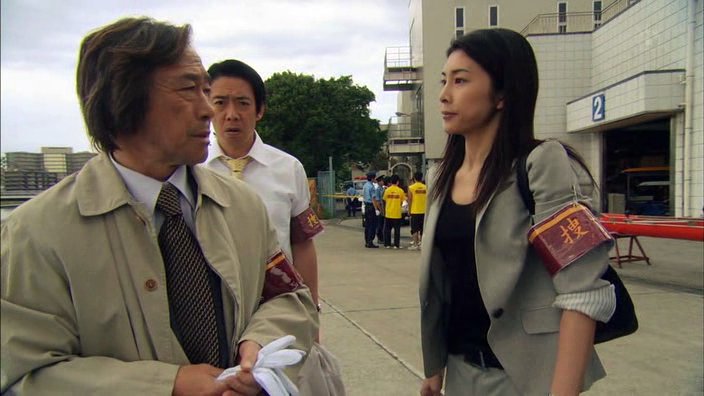
When a body wrapped in a blue plastic tarp is found near a pond in a Tokyo suburb, Lieutenant Himekawa (Yuko Takeuchi) and her squad from the homicide division of the Metropolitan Police are called in to investigate the unusual circumstances behind the crime. It's a baffling case---the man who was brutally murdered came from a modest background with no known enemies, and it's a complete mystery as to why the body, with its stomach carved out, was dumped in such a conspicuous place. The case takes a rather bizarre turn when a second body is found with the same signs of torture and cause of death, but there appears to be nothing to connect the two victims together.


The police's only lead is an exchange on a message board discussing a site on the dark web, which has Himekawa convinced that they're dealing with a methodical killer with a high body count. She alerts her superiors of this possibility but has trouble convincing them of the merits of her theory. With her right hand man (Hidetoshi Nishijima) stuck behind a desk and rival detective, Katsumata (Takeda Tatsuya), breathing down her neck, Himekawa has to struggle against professional impediments and personal prejudice to usher the case forward, bringing to light a world where death is proffered as a spectacle.

The Strawberry Night SP is a solid adaptation of its source material, being arguably the best of the lot, simply for supplying viewers a structured story. It also happens to be the only one in the series that offers a sense of closure to the case, all the while touching upon issues such as social injustice and apathy, law enforcement inefficiency in criminal apprehension and gender discrimination.

Well-paced, with the deductions made being logically sound, this television special, for the most part, is an engaging mystery that also makes use of the more sinister aspect of the dark net. It has a perpetrator that exploits the dichotomy of life and death, attracting victims to witness a person's demise as if it were performance art---the most chilling part of it all, is that these people were willing participants and patrons to this Sunday theater, who can even be considered as accessories after the fact.


There is sufficient information provided about the protagonist, the killer and the victims to make this a well-rounded effort. The motivation behind the killings might be a bit extreme but it's often the type of existentialist dilemma that is featured in this sub-genre of Japanese television and cinema. The material does not shy away from everything that's vile and sordid and for this reason credit should be given to screenwriter Yukari Tatsui for keeping the story moving and intact without relishing the gory details. Furthermore, director Yuichi Sato's command of every frame provided subtle hints and sufficient exposition to the case without giving away the big reveal of the identity of the sought after criminal. It's a twist that not many will see coming and this is probably one of the few times when the endeavor to misdirect viewers really pays off. 

But perhaps the highlight of the show is not so much the commission of the crime---which is horrific in itself---but rather, the depiction of how the traditional policing model in Japan can hamper the resolution of cases. Extremely bureaucratic and political, police officers and detectives are shown to be mired in jurisdictional and intra-agency rivalries, often withholding information and reluctant to cooperate with each other. The Iron Gun's unorthodox methods of securing information provide a nice foil to Himekawa's intuitive reasoning and impulsiveness, turning the special into a contest on which detective will first crack the case. 

Entertaining though it may be, the Strawberry Night SP is far from perfect, given a weak third act and an overbearingly defensive heroine. Given her traumatic past and present hostile work environment, it's understandable how an ambitious woman like Himekawa would have a chip on her shoulder but it is quite unsettling to see her lashing out indiscriminately at people who care and support her. There's also quite a leap in logic at the very end on her part when the mastermind is uncovered and an unearned display of empathy towards a virtual stranger that is somewhat puzzling to say the least. The gallery salute and the insertion of a ghostly apparition seem out of place with the overall tone of the series and lastly, there are a number of questions  left unanswered regarding the true status of Himekawa's relationship with a certain colleague.  


RATING:
WELL-PACED CRIME PROCEDURAL
TROUBLED, COMPLEX HEROINE
OFF-PUTTING GHOSTLY APPARITION
WEAK THIRD ACT

Read More

Sunday, August 28, 2016

Dokushin Kizoku (2013)


Dokushin Kizoku is a romantic comedy series that is more like an homage to classical Hollywood films than an earnest depiction of contemporary single life. It has elements of the quiet, pristine romances prevalent in the Golden Age of cinema, at times, being out of touch with present day reality, often caught up in scenarios that would have otherwise been tolerable if this were made in a different century.  It starts off with three single people with individual reasons to detest marriage and steamrolls its way to the rigors of the movie-making business and yet, it does not really make strides to push that particular subplot. At best, it's about how one self-proclaimed bachelor for life meets his one true love and reconsiders his view on marriage....but to say that's all there is would be myopic. The series is predictable to a fault and though it is peppered with sweet moments and lots of movie references, such timid intimations of love between the lead characters may not be enough to tide die-hard romantics through eleven episodes of near misses and forced endearments.

Hoshino Mamoru (Kusanagi Tsuyoshi) is the head of a film production company who relishes his time alone. He goes out on dates but pays the women no mind, firm in his opinion that matrimony and sharing his life with someone would be nothing but bothersome. Temporarily living in his apartment is his brother, Susumu (Ito Hideaki), who continues to carry on a dalliance with a revolving door of women even though he's about to be taken to the cleaners by his ex-wife. Though different in demeanor and attitude towards work and women, the Hoshino brothers agree on one thing---there's nothing more precious than being free and unhampered, for nothing beats living the single life.


Trouble brews on the horizon when the screenwriter they contracted fails to produce a script for their latest venture. With the company's investors ready to pull out at any moment and their aunt (Dewi Sukarno) imposing Mamoru's engagement to aristocrat, Genouzono Reika (Hiraiwa Kami) as a condition to providing financial support, the brothers scramble to salvage the impending movie project.

Susumu decides to pass off a screenplay written by aspiring writer, Haruno Yuki (Kitagawa Keiko) to the investors as a quick fix, but Mamoru objects to the said plan as a matter of principle. To keep the company afloat, he acquiesces to the arranged marriage and offers Haruno an internship to familiarize herself with the movie business while working on her screenplay.

Matters of the heart and work soon collide as Haruno attracts the attention of the Hoshino brothers. She gets swept off her feet by the younger and personable Susumu; slow to realize how the older and introverted Mamoru would be a better match for her creative sensibility and reticent personality. Though alike in many ways, these two inert individuals take a rather long and awkward path to finding each other, and not without the intervention of meddling bystanders and concerned well-wishers.

Contrary to its title, Dokushin Kizoku is not really about the swinging single life. Yes, it's a love story that takes root during the course of a movie production but, in its own way, it's also a circumspect tribute to cinematic endeavors in general. It has protagonists who are certified cinephiles who share a strong belief in film, not only as a form of artistic expression but also as a medium that captures the imagination and opens up worlds that would otherwise have been out of reach.


On the business side of things, each episode takes audiences through common problems encountered in putting together a movie project such as working with divas, hosting premieres, soliciting advertisers, casting choices and securing location permits. The series also manages to present the veritable conflict between the commercial and creative demands of the industry, including the existence of the proverbial casting couch. However, it often falls back on clichés, as if totally oblivious to the consequences of a breach in contract, the threat of a sexual harassment suit or the oft-discussed complications of having a workplace romance.

Dokushin Kizoku more or less tries to mesh what would have been a 50's prototypical romance with the supposed cutthroat film industry but is unable to adeptly present or explore each storyline from a fresh, unfiltered perspective. It remains pleasant and wholesome, which is part of its old school charm.

Characters would often speak about romantic love and destiny, citing lines in verbatim from stock movies such as Sleepless in Seattle and While You Were Sleeping and even serendipity comes at play, but the material's too chaste approach and often languorous pacing somehow tamps the magic of its so-called meguri aetera. With inspiration culled right out of celluloid dreams and music invoking a myriad love stories, it's a wonder how the romantic scenes allotted to its one true pairing  were so few and far between.


There's just not enough of either the love story or the workplace drama---with symbolic tokens conveniently forgotten and professional impediments easily brushed aside. But while it may lack originality, it does manage to recreate the type of story where love and intimacy can develop without physical contact and where the gravitational pull between soulmates is so apparent that third parties have no choice but to nobly step aside.

As a side note, Kusanagi Tsuyoshi's performance at the end of episode seven deserves mention for what comes across as a sincere and heartfelt admission, while Hiraiwa Kami gets major props for playing an initially annoying side character, who ends up saving the day by boldly proclaiming, "there's no such thing as fate". Now if only she lost the birdcage headbands...

RATING:
PRISTINE ROMANCE
GEEKY MOVIE REFERENCES
LIMITED OTP INTERACTION 
MEDDLING SIDE CHARACTERS

Read More